SeaFi: DeFi Platform Redesign on Avalanche
SeaFi
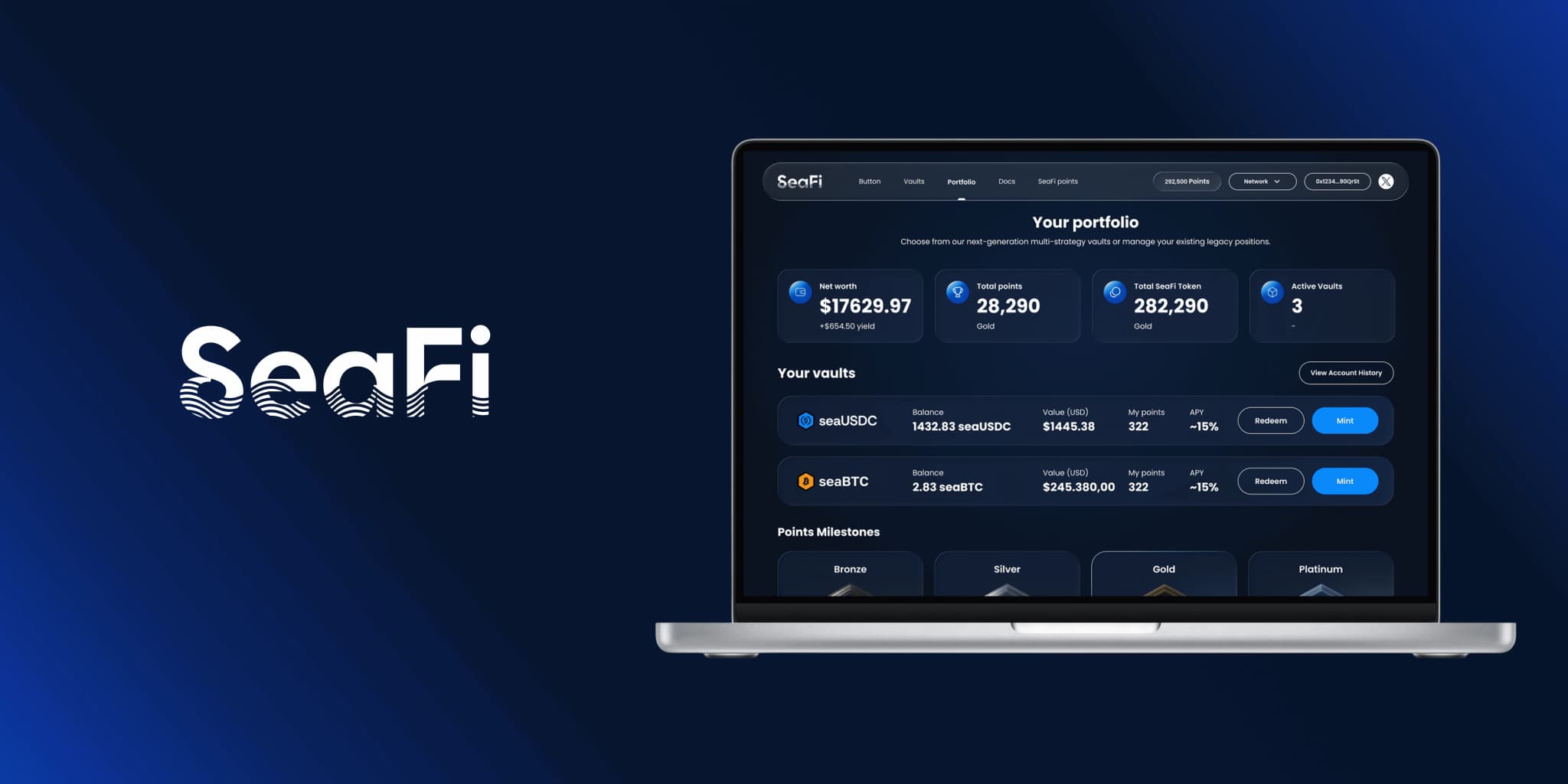
DeFi PlatformLed the end-to-end redesign of SeaFi, a DeFi platform on Avalanche.
Improved usability by streamlining core flows, modernized the visual identity, and established a scalable Design System aligned with engineering needs.
SeaFi is a DeFi protocol on Avalanche that allows users to earn yield on their AVAX through vaults powered by GoGoPool validators.
The existing platform had an outdated UI, user flows with unnecessary steps, and a frontend codebase without a unified design system, leading to inconsistencies and slower development.
Company
SeaFi
Year
2025
Role
UI/UX Designer
The challenge
The platform had a visually outdated UI that failed to convey trust for a financial product.
User flows included unnecessary steps and screens, increasing friction and reducing efficiency.
Developers relied on inconsistent style guidelines, leading to visual fragmentation across the product.
The brand did not align with current DeFi ecosystem standards and expectations.
How it was rebuilt
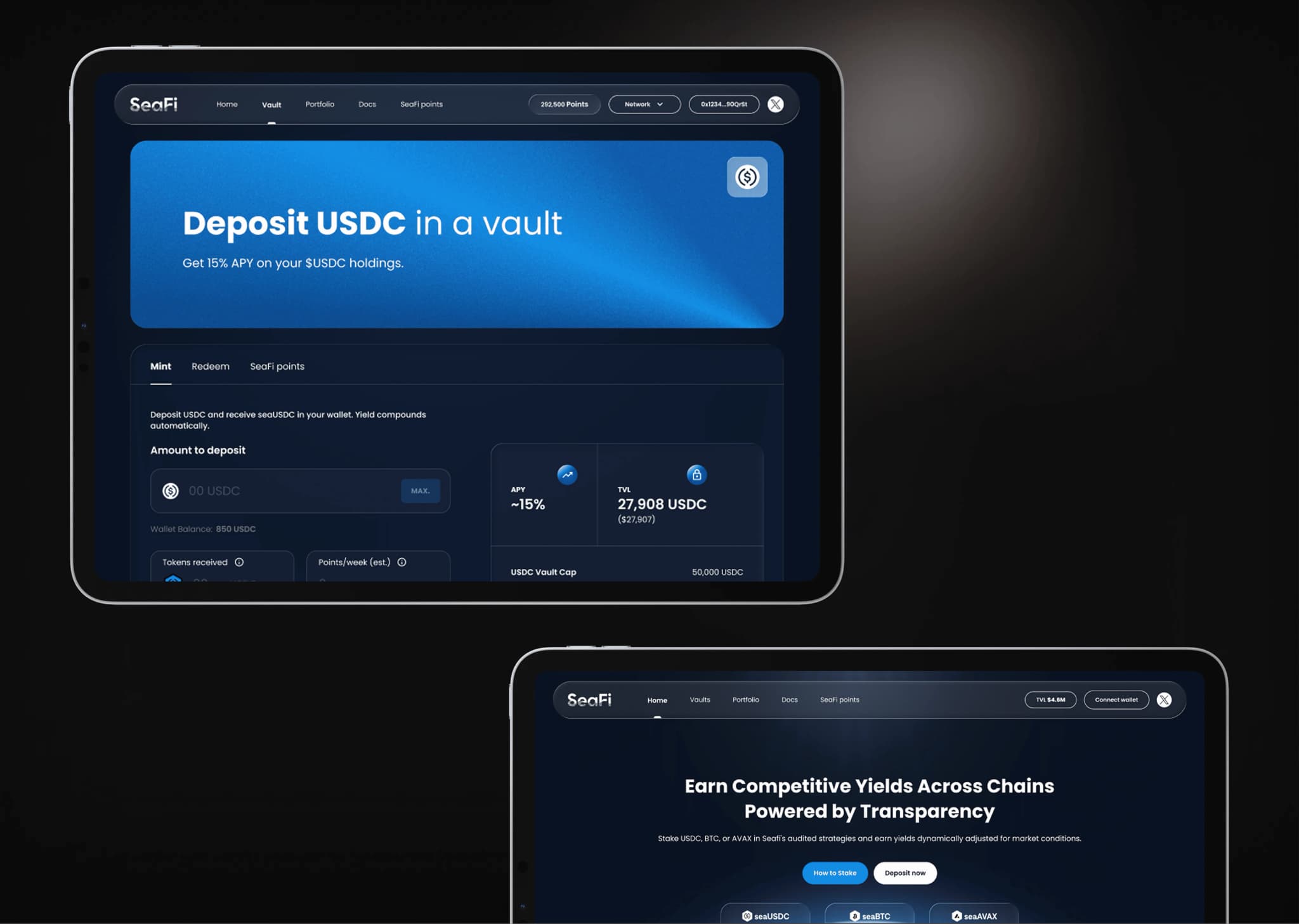
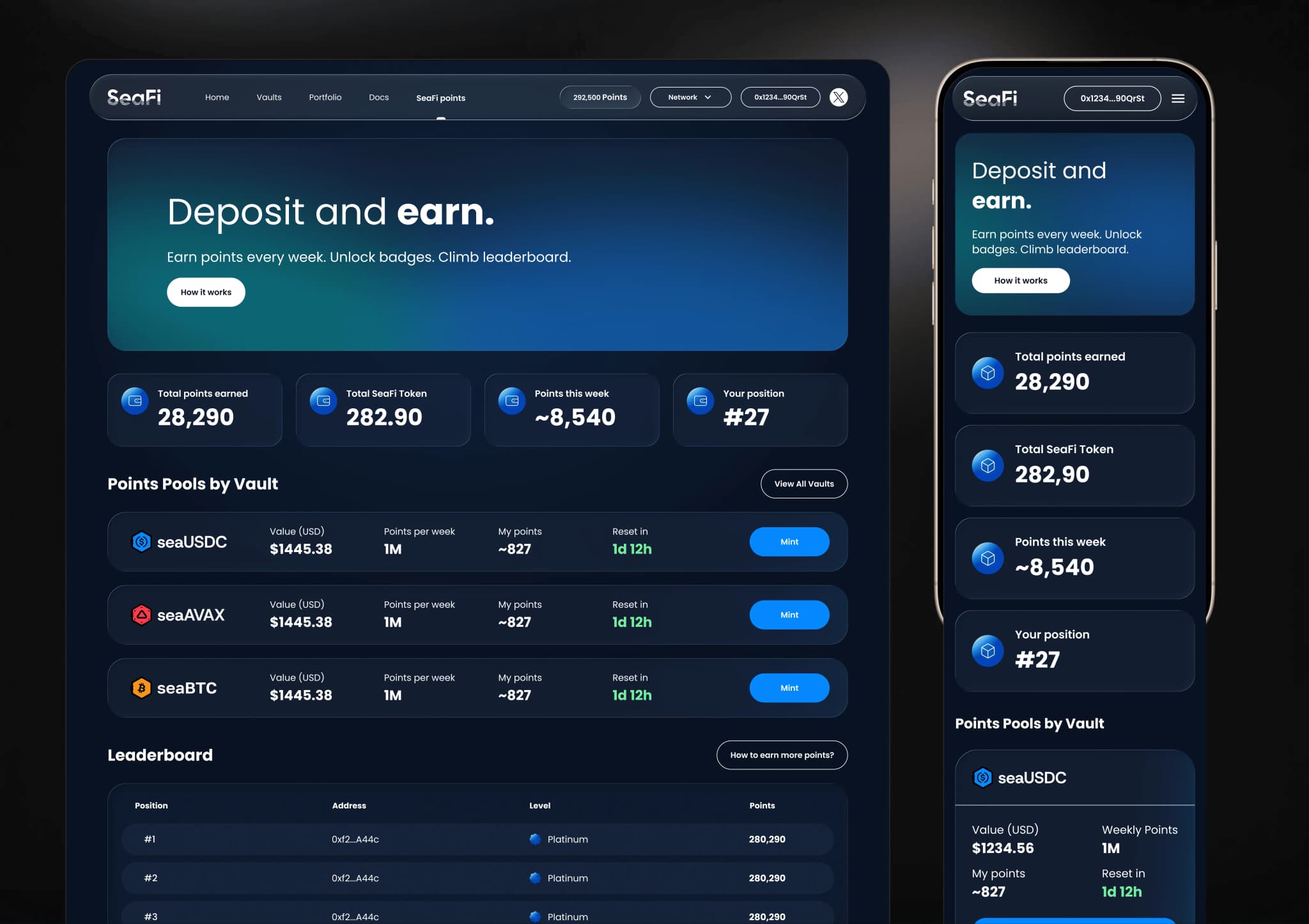
01 Full UI redesign: modernized the visual layer following current DeFi design trends, with a strong focus on trust, clarity, and a more refined aesthetic.
02 Friction reduction: streamlined deposit, withdraw, and staking flows by removing unnecessary steps and screens, improving clarity and efficiency.
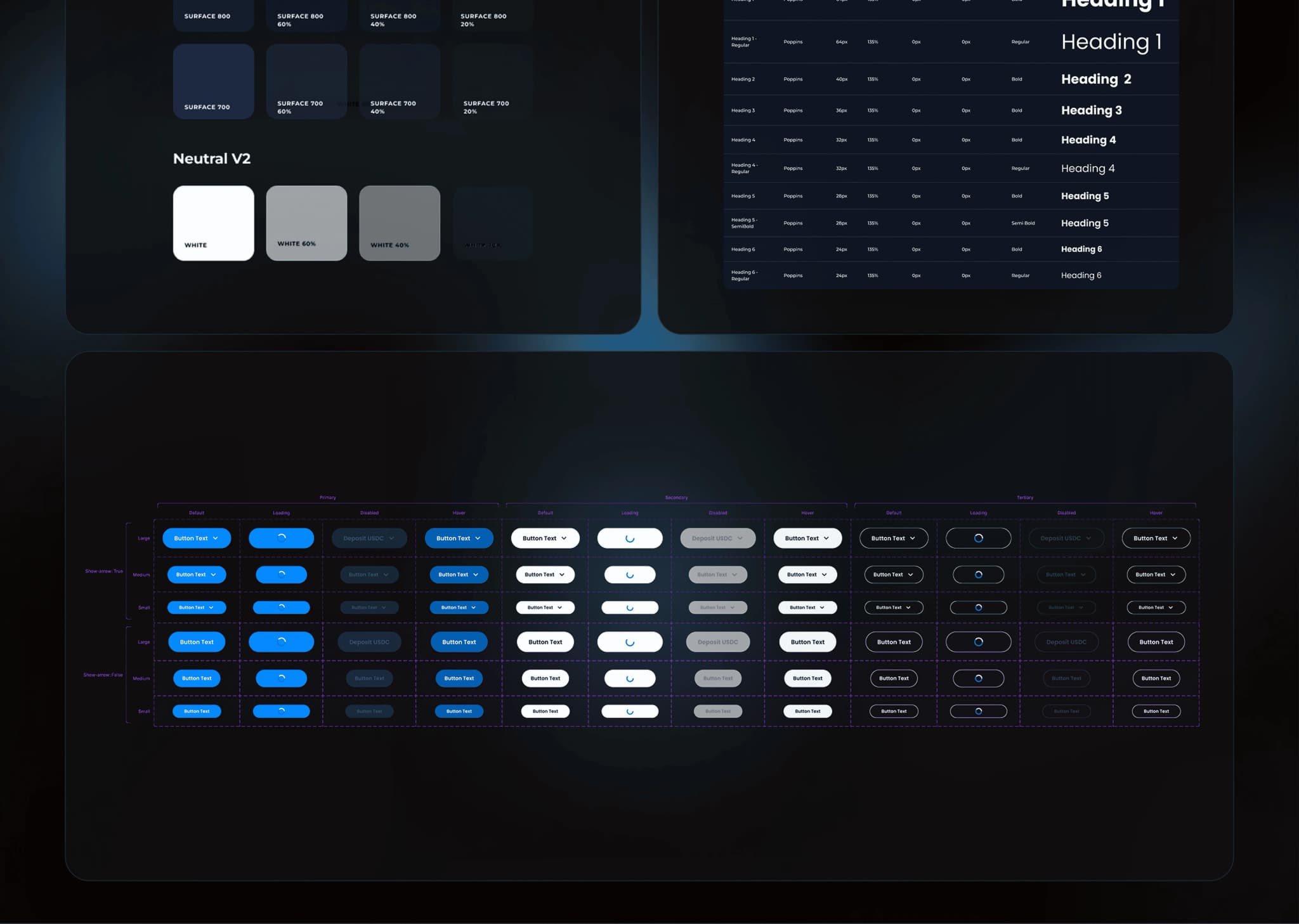
03 Developer-ready design system: built a component system optimized for direct implementation, with clear design tokens and practical documentation for live coding.
04 Brand redesign: created a new visual identity aligned with the evolution of the Avalanche ecosystem and current DeFi trends.
Design process
I started with a visual and UX audit of the existing platform to identify key pain points and areas of friction.
I then benchmarked leading DeFi platforms such as Aave, Lido, and Yearn to define a clear visual and interaction standard.
Based on these insights, I redesigned the core flows, including deposits, withdrawals, and yield visualization.
In parallel, I built a Design System with reusable components, color tokens, typography, and spacing guidelines.
Finally, I delivered structured and implementation-ready files to enable a smooth and efficient handoff to the development team.
Lessons from the rebuild
Designing trust in DeFi: in financial products, every visual detail shapes the perception of security. UI is not decoration, it's a trust signal.
Design systems as a bridge to engineering: a well-structured Design System aligned with developer workflows accelerates implementation and reduces visual inconsistencies.
Less is more in financial flows: every extra step introduces friction and increases drop-off. Simplifying flows has a direct impact on conversion.